Published by BioDome
At BioDome, we’re passionate about sustainable indoor agriculture, bringing fresh, healthy produce to people across the US. If you’ve ever wanted to grow your own food but thought you lacked space or time, microgreens are the perfect way to start. They’re packed with nutrients, easy to grow, and ready to harvest in just a couple of weeks! This guide breaks down everything you need to know, inspired by our latest video tutorial.
Why Grow Microgreens?
Microgreens are the baby plants of vegetables and herbs, harvested just after the first leaves emerge. They’re a superfood, offering intense flavors, vibrant colors, and up to 40 times more nutrients than their mature counterparts. Plus, they’re low-maintenance, making them ideal for beginners and seasoned indoor farmers alike.
Watch a Video Tutorial
For a visual demonstration and pro tips, check out our latest video:
Microgreens Made Easy: Step-by-Step Guide for Beginners
Step-by-Step Guide to Growing Microgreens at Home
Step 1: Gather Your Supplies
Here’s what you’ll need to get started:
-
- Seeds: Choose microgreen varieties like greens mix, radish, sunflower, broccoli, or kale.
- Growing Tray: Use a shallow tray (depending on the growing medium you use, you may or may not want drainage holes).
- Growing Medium: Coco coir, potting soil, or a rockwool mat (recommended) are great options.
- Bucket or Watering Can: For mixing nutrients and wetting your growing medium.
- Light Source: Natural light or an LED grow light (you must use a full-spectrum lighting source specifically designed for plants)
- Covering for Growing Tray: This can be anything from plastic wrap to a humidity dome. It just needs to cover your tray and hold in the humidity.
- Nutrients: Hydroponic nutrient solutions.
Places we shop and supplies we use:
- Hydroponic Supplier – GrowGeneration
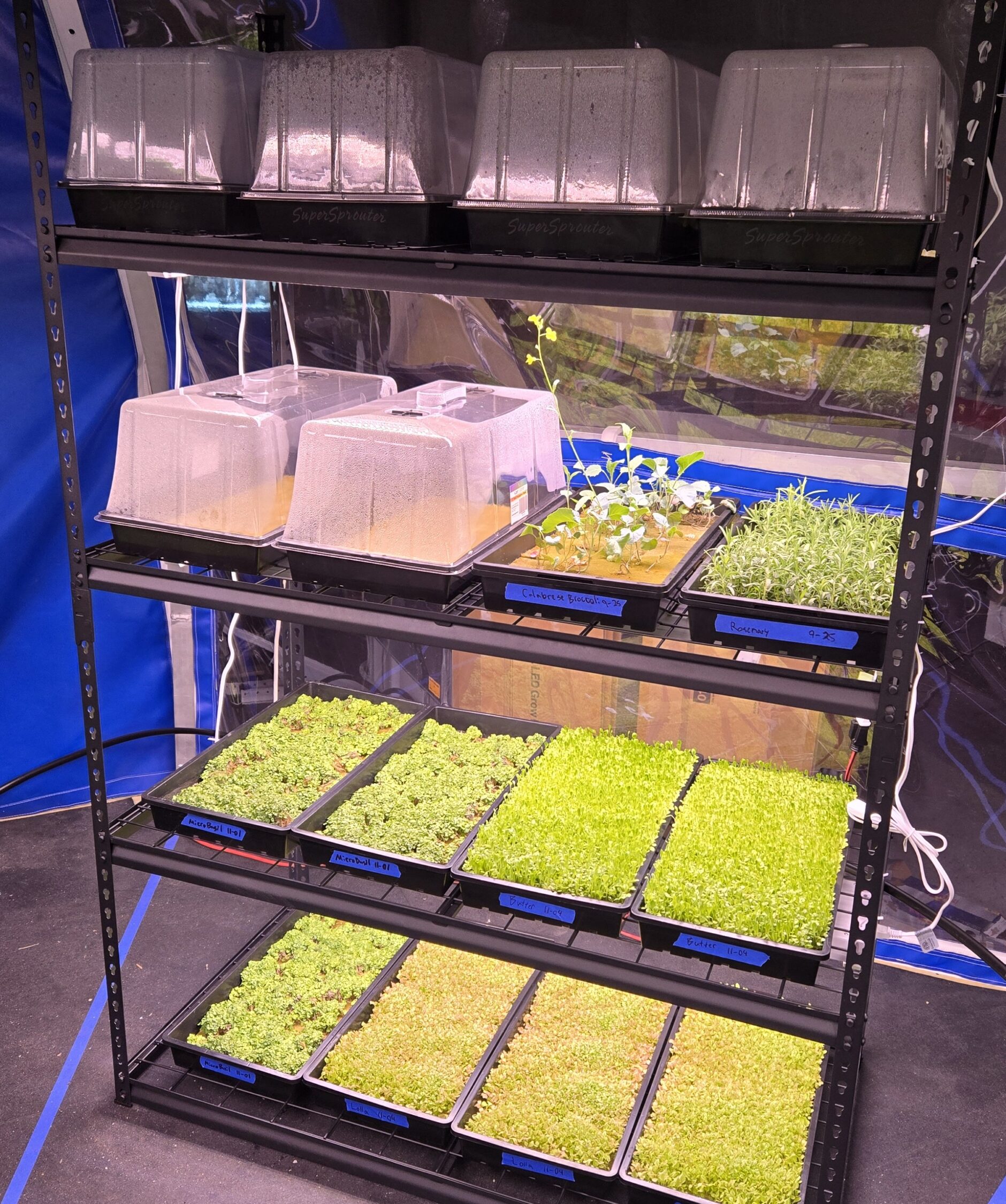
- Super Sprouter Quad Thick 10 x 20 Tray
- Grodan Cress Plate Propagation Mat 10 in x 20 in
- Char Coir Coirganic Coco
- SuperStarter 7″ Vented Propagation Dome
- Organic Seeds – Johnny’s Select Seeds
- Organic Seeds – True Leaf Market
- Organic Seeds – High Mowing Organic
- 3 Part Nutrient Stack – General Hydroponics FloraMicro, FloraBloom, & FloraGro
- Full Spectrum Lighting – Indoor Grow Lights for Plants by Sunco
Pro Tip: At BioDome, we recommend using organic, untreated seeds for the best results.
Step 2: Prepare the Growing Tray
- Fill your tray with 1 rockwool mat or 1–2 inches of your chosen growing medium.
- Evenly distribute the medium (if using coco coir or soil), ensuring its level for consistent seed growth. It may even help to pack it down.
- Prepare in a bucket or watering can: 3 part nutrient solution (follow directions on packaging or General Hydroponics for proper dosing) and water. You will need about 1.7L of water for a 10 x 20 tray.
- Pour water and nutrient solution mixture into the growing medium in the growing tray until the growing medium is fully saturated.
- If using rockwool, do not allow the water to pool on top of the rockwool, just enough to saturate the full mat.
- For coco, add water and nutrient mix until it forms a mud-like mixture.
- For soil, add water until damp.
- Let sit for 24-48hrs to absorb nutrients and balance pH.
Step 3: Sow the Seeds
- Scatter your seeds evenly across the surface. Use enough to cover the growing medium, but avoid overlapping too much.
- For a 10 x 20 tray use:
- 10g of large seeds (most leafy greens)
- 15g of small seeds (like basil)
- For a 10 x 20 tray use:
- Gently press the seeds into the growing medium without burying them.
Pro Tip: Soaking seeds like sunflower or pea overnight before planting can improve germination.
Step 4: Create the Perfect Environment
- Cover the tray with another empty tray or a lid to create a humid environment for germination.
- Keep the tray in a warm place, around 65–75°F (18–24°C).
Step 5: Provide Light
- Place the tray on a sunny windowsill or under a grow light for 12–24 hours a day.
- Leafy greens can take up to 24hrs of light. The more light they get, the faster they grow
- Rotate the tray if using natural light to ensure even growth.
Step 6: Harvest Your Microgreens
- Microgreens are ready to harvest in 11-14 days, once they’re about 2–3 inches tall, before they begin growing adult leaves.
- If using a rockwool mat, remove the entire mat from the growing tray.
- Use scissors or pruning sheers to cut the greens just above the growing medium.
- Wrap in a damp paper towel and store them in a plastic bag in the refrigerator. Stored like this, they will keep for 7-14 days.
Pro Tip: Don’t harvest all at once! Stagger your harvest to enjoy fresh greens over several days.
How to Use Microgreens
Microgreens are incredibly versatile. Add them to salads, sandwiches, smoothies, or even use them as a vibrant garnish. They’re a small yet powerful addition to any meal!
Watch the Full Video
For a visual demonstration and pro tips, check out our latest video:
Grow Microgreens at Home with BioDome
Join the BioDome Movement
Stay connected with BioDome for more urban farming tips, product updates, and innovative solutions for sustainable living. Follow us on social media and subscribe to our newsletter for exclusive content.
Start growing your future today with BioDome. It’s indoor farming made simple.